

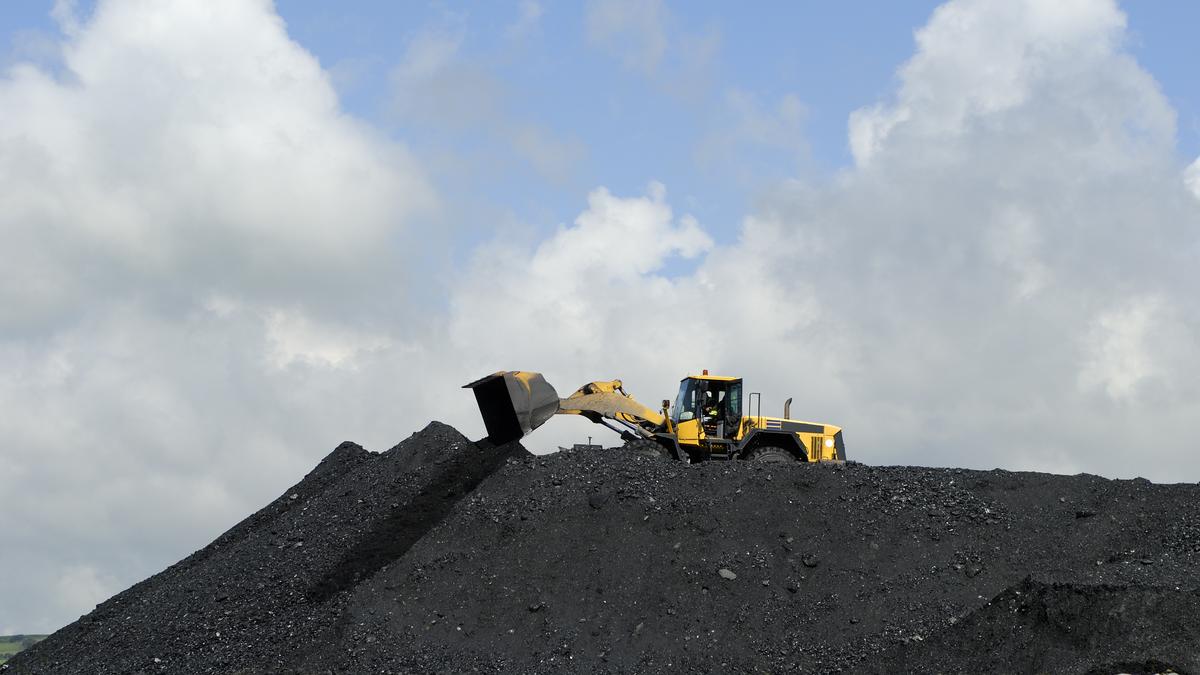
Image for representational purposes only.
| Photo Credit: redmal
Efforts must be made to reduce the average time it takes to accord forest and environmental clearances to coal blocks, the parliament’s standing committee on coal, mines and steel stated in their latest report tabled Wednesday. Additionally, it noted that private sector entities required more time to receive the prerequisite clearances than peers in the public sector. The committee sought they be apprised of the probable reasons for the same.
For context, the committee observed that it takes 15 to 18 months for a public-sector enterprise to receive an environment clearance to mine a coal block, compared to about 26 months for a commercial coal block of a private sector entity.
The paradigm extends to forest approvals as well. The committee noted that public-sector companies have been observed to receive the clearance between 24 to 30 months. This compares to private sector peers which have had to wait for about 34 months.
To address the paradigm, it suggested, “…that a system to coordinate between the stakeholders like project proponent, state level environment authority, Ministry of Forest, Environment and Climate Change (MoFECC) and others may be explored to expedite the clearances.”
Streamlining and standardising process for public, Gram Sabha consultations
Among other things, the committee sought the coal ministry along with the tribal affairs, and the forest and environment ministry, develop a standardised protocol to take into account a Gram Sabha’s resolutions, and verification procedures (as per the governing Forest Rights Act, 2006) across all coal-bearing states, for according forest clearances. Whilst recognising the importance of consultations and mandatorily receiving clearance from Gram Sabha in protecting indigenous rights, the committee observed a delay with the same is most frequently cited as progressing to a further delay in receiving forest clearances. It noted the delays are primarily caused due to “complexities of coordination across multiple districts and management of local objections, aggravated by local elections or the need to align schedules of various authorities such as the Deputy Commissioner (DC) and the State Pollution Control Board.”
Separately, the committee noted concerns about delay were also placed about “repeated or lengthy public hearings”. However, it observed, “This lengthy process has led to reforms allowing up to 50% expansion in production capacity without the requirement of a fresh public hearing.” The public hearing stage is a mandatory prerequisite for both environmental and forest clearances. It allows local communities to air their probable concerns as well as for miners to ensure “transparency and accountability”.
To this effect, the committee sought to propose streamlining the process by allowing hybrid modes of public consultation with online hearings. This is to “reduce redundancy and procedural delays, while ensuring genuine participation.”
Streamlining process to vet clean coal technology projects
To accelerate deployment of technologies with potential lower environmental footprint and risk profile, the committee suggested that the Coal Ministry explore the feasibility of instituting a Joint-Sub Committee along with the forest and environment ministry and Director General of Mines Safety to vet such project projects through a single appraisal process. Additionally, the committee recommended integrated guidelines may also be framed on emerging technologies – underlining the route for clearance and environmental safeguards in accordance with “the carbon impact they tend to make”.
Published – December 11, 2025 12:20 am IST

.JPG "Rural food prices continued to surge in April")

